 EN
EN

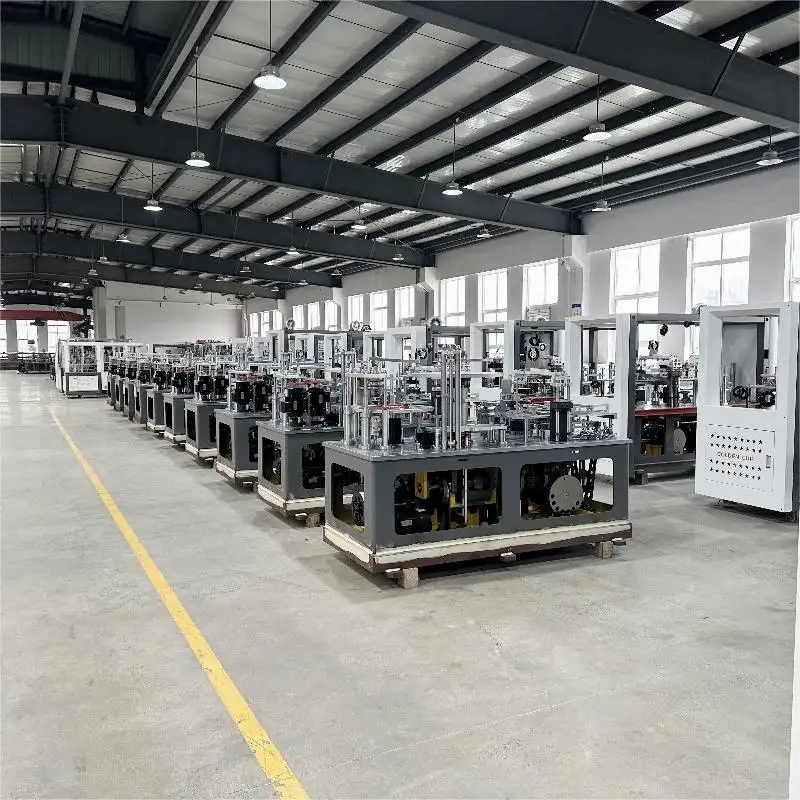
Thermoforming has emerged as a transformative technology across modern manufacturing sectors, particularly where precision, efficiency, and material optimization are paramount. Industries spanning food packaging, medical devices, automotive components, and consumer goods increasingly rely on thermoforming processes to produce high-quality plastic products at scale. The strategic advantages of integrating thermoforming machines into manufacturing operations extend beyond simple production output, fundamentally reshaping how businesses approach product development, cost management, and market responsiveness. Understanding these advantages enables manufacturers to make informed capital investment decisions that align with both operational goals and long-term competitive positioning.
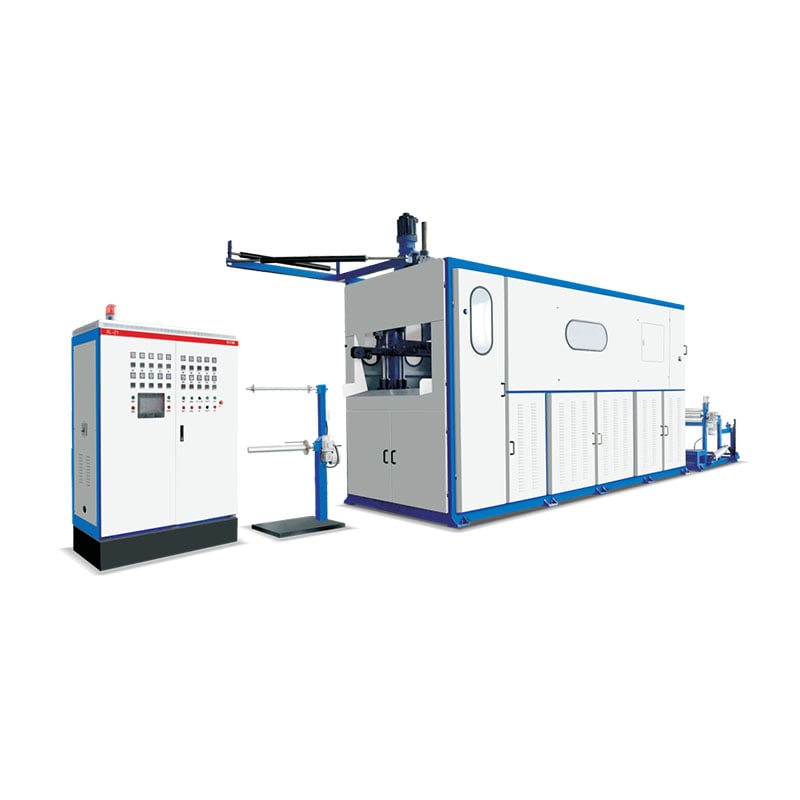
For manufacturers evaluating production technology investments, thermoforming machines represent a compelling value proposition that balances capital expenditure with operational flexibility. Unlike alternative plastic forming methods such as injection molding or blow molding, thermoforming offers distinct economic and technical benefits that become particularly evident in specific application contexts. Food packaging manufacturers, for instance, recognize that a specialized thermoforming machine for food packaging delivers not only production efficiency but also compliance capabilities essential for meeting stringent food safety regulations. This article examines the multifaceted advantages that make thermoforming machines increasingly central to competitive manufacturing strategies across diverse industrial applications.
Economic Efficiency and Cost Optimization
Lower Tooling Investment Requirements
One of the most significant financial advantages of thermoforming technology lies in substantially reduced tooling costs compared to alternative plastic forming processes. Injection molding, while suitable for certain applications, typically requires precision-machined steel molds that can cost tens of thousands to hundreds of thousands of dollars depending on part complexity and production volume requirements. Thermoforming molds, by contrast, often utilize aluminum or composite materials that can be fabricated at a fraction of the cost, with many simple to moderate complexity molds produced for several thousand dollars. This fundamental cost differential creates strategic opportunities for manufacturers, particularly those operating in market segments characterized by frequent product changes, shorter production runs, or rapid prototyping requirements.
The reduced tooling investment associated with thermoforming machines directly impacts product development cycles and market entry strategies. Manufacturers can economically produce multiple mold variations to test different design concepts, conduct market trials, or accommodate seasonal product variations without incurring prohibitive capital expenses. For food packaging applications specifically, where package design frequently evolves in response to consumer preferences, regulatory changes, or marketing initiatives, the ability to modify tooling quickly and affordably represents a decisive competitive advantage. A thermoforming machine for food packaging enables producers to respond to market opportunities with agility that would be financially impractical using higher-tooling-cost alternatives.
Material Efficiency and Waste Reduction
Thermoforming processes demonstrate superior material utilization characteristics that translate directly into reduced raw material costs and enhanced sustainability performance. The process begins with pre-manufactured plastic sheet stock that is heated and formed over molds, with excess material trimmed away after forming. Critically, this trimmed material can typically be reground and reintroduced into the manufacturing process either through sheet extrusion or blending with virgin material, creating a closed-loop material flow that minimizes waste. Advanced thermoforming machines incorporate inline trim removal systems and material recovery equipment that automate this recycling process, further improving material efficiency and reducing handling labor.
The material efficiency of thermoforming becomes particularly advantageous when working with expensive engineering-grade plastics or specialty materials incorporating barrier properties, antimicrobial additives, or other performance-enhancing compounds. Since thermoforming utilizes relatively thin-gauge sheets and achieves excellent material distribution during forming, manufacturers can produce functional parts with minimal material consumption. For food packaging manufacturers utilizing thermoforming machine for food packaging systems, this efficiency directly impacts per-unit packaging costs while supporting corporate sustainability initiatives. The combination of material efficiency and recyclability positions thermoforming as an environmentally responsible manufacturing approach that simultaneously delivers economic benefits.
Scalability and Production Flexibility
Thermoforming technology offers exceptional scalability characteristics that allow manufacturers to align production capacity precisely with market demand without excessive capital investment. Unlike injection molding systems that typically require substantial minimum production volumes to justify tooling costs, thermoforming machines can economically produce small to medium batch sizes, making them ideal for specialized products, regional market segments, or customized packaging solutions. This scalability extends in both directions—manufacturers can efficiently produce limited prototype runs for market testing while maintaining the capability to scale up to high-volume production as demand warrants.
The production flexibility inherent in thermoforming systems also manifests through rapid changeover capabilities between different products or package configurations. Modern thermoforming machines incorporate quick-change tooling systems, automated parameter adjustment, and integrated quality control features that minimize downtime during product transitions. For food packaging operations running multiple package formats or serving diverse customer segments, a thermoforming machine for food packaging with rapid changeover capabilities enables efficient production scheduling and inventory management. This operational flexibility translates into improved asset utilization, reduced work-in-process inventory, and enhanced responsiveness to customer requirements.
Technical Performance and Product Quality
Precise Dimensional Control and Consistency
Contemporary thermoforming machines incorporate sophisticated process control technologies that deliver exceptional dimensional accuracy and part-to-part consistency throughout production runs. Advanced heating systems with zoned temperature control ensure uniform sheet heating across the entire forming area, eliminating hot spots or cool zones that could compromise part quality. Precision pressure control systems regulate both forming pressure and vacuum levels with millisecond-level timing accuracy, enabling consistent material distribution and detail reproduction across thousands of consecutive forming cycles. These technical capabilities ensure that thermoformed products meet strict dimensional tolerances essential for automated filling operations, assembly processes, or precise fit requirements.
For food packaging applications, dimensional consistency directly impacts production efficiency throughout the entire packaging value chain. Containers produced on a thermoforming machine for food packaging must interface precisely with filling equipment, lidding systems, labeling machinery, and case packing automation. Even minor dimensional variations can cause jam conditions, rejection waste, or production stoppages on downstream equipment. High-quality thermoforming machines address this challenge through integrated measurement systems, adaptive process control algorithms, and statistical process monitoring capabilities that detect and correct process variations before they result in out-of-specification products. This technical precision translates into higher overall equipment effectiveness across integrated packaging lines.
Superior Surface Quality and Aesthetic Appeal
Thermoforming processes naturally produce parts with excellent surface finish characteristics, particularly on the side of the formed part that contacts the mold during forming. This capability proves especially valuable for consumer-facing packaging applications where visual appeal directly influences purchase decisions. The smooth, glossy surface typical of thermoformed packaging enhances product visibility, supports high-quality graphics reproduction, and conveys premium product positioning. Unlike some alternative forming methods that may introduce surface imperfections, flow lines, or texture variations, thermoforming maintains consistent surface quality across the entire formed surface.
Modern thermoforming machines enhance surface quality through advanced mold finishing techniques, optimized heating profiles, and controlled cooling cycles that minimize stress marks or other cosmetic defects. For transparent or translucent food packaging applications, surface quality becomes particularly critical as any imperfection is immediately visible to consumers. A thermoforming machine for food packaging equipped with precision temperature control and optimized forming cycles produces crystal-clear containers that showcase food products attractively while maintaining the structural integrity necessary for product protection. This combination of aesthetic appeal and functional performance creates packaging that enhances brand perception and supports premium pricing strategies.
Multi-Material and Multi-Layer Capabilities
Advanced thermoforming technology accommodates complex material structures including multi-layer sheets that combine different polymers to achieve specific performance characteristics. Food packaging frequently requires barrier properties that prevent oxygen transmission, moisture migration, or aroma loss while maintaining transparency, structural strength, and formability. Co-extruded multi-layer sheets integrate these diverse properties into single sheet structures that thermoforming machines can process effectively. The ability to work with sophisticated material structures enables manufacturers to optimize packaging performance for specific product protection requirements without resorting to secondary coating operations or expensive specialty polymers.
The versatility of thermoforming extends to accommodating various thermoplastic materials including polyethylene terephthalate, polypropylene, polystyrene, polyvinyl chloride, and numerous specialty polymers. This material flexibility allows manufacturers to select the optimal polymer for each specific application based on performance requirements, cost considerations, regulatory compliance, and sustainability objectives. A thermoforming machine for food packaging can typically process multiple material types with relatively minor adjustments to heating parameters and forming conditions, providing operational flexibility that supports diverse product portfolios without requiring dedicated processing equipment for each material type.
Operational Advantages and Process Integration
Automated Production and Labor Efficiency
Modern thermoforming machines incorporate comprehensive automation features that minimize direct labor requirements while maximizing production consistency and throughput. Automated material feeding systems handle sheet stock loading, positioning, and advancement through the forming station without manual intervention. Integrated trim press systems remove excess material and separate finished parts from the sheet skeleton in coordinated operations that maintain cycle time efficiency. Robotic part handling systems can transfer formed products directly to downstream processes such as printing, filling, or secondary assembly operations, creating fully integrated production cells that operate with minimal human oversight.
The labor efficiency advantages of automated thermoforming systems extend beyond direct production operations to encompass reduced training requirements, improved workplace safety, and enhanced quality consistency. Since the thermoforming process itself is enclosed within the machine envelope during heating and forming operations, operator exposure to hot surfaces or moving components is minimized. Touchscreen interfaces with intuitive graphical controls enable operators to monitor process parameters, adjust settings, and troubleshoot issues without specialized technical expertise. For food packaging manufacturers operating multiple shifts or facing labor availability challenges, a thermoforming machine for food packaging with comprehensive automation capabilities delivers operational reliability and cost predictability that supports long-term business planning.
Integrated Quality Control and Process Monitoring
Contemporary thermoforming machines incorporate sophisticated quality monitoring systems that provide real-time process visibility and automated defect detection. Vision inspection systems examine formed parts for dimensional accuracy, surface defects, contamination, or material thickness variations, automatically rejecting non-conforming products before they enter downstream processes. Process sensors continuously monitor critical parameters including sheet temperature, forming pressure, cycle timing, and cooling rates, comparing actual performance against established specifications and alerting operators to any deviations. This integrated quality infrastructure reduces the risk of producing out-of-specification products while generating comprehensive production data that supports continuous improvement initiatives.
The data collection and analysis capabilities embedded within modern thermoforming systems enable manufacturers to implement predictive maintenance strategies that minimize unplanned downtime and extend equipment service life. Machine controllers log operating parameters, cycle counts, and alarm conditions, identifying patterns that indicate developing maintenance issues before they cause production interruptions. For food packaging operations where production schedule reliability directly impacts customer service levels and supply chain performance, a thermoforming machine for food packaging with predictive maintenance capabilities provides operational stability that justifies premium equipment investment. The combination of quality control integration and maintenance optimization delivers total cost of ownership advantages that compound over the equipment's operational lifetime.
Environmental Control and Cleanroom Compatibility
Thermoforming machines designed for food packaging applications incorporate features that support operation in controlled environments meeting food safety and hygiene requirements. Enclosed forming areas minimize airborne contamination exposure during the critical forming process when material is hot and most vulnerable to particle adhesion. Smooth, stainless steel construction facilitates cleaning and sanitation procedures required in food manufacturing environments. Some advanced thermoforming systems integrate HEPA filtration, positive pressure enclosures, or clean room-compatible design features that enable operation in ISO-classified environments for sensitive food packaging applications or pharmaceutical products.
The environmental compatibility of thermoforming equipment extends to energy efficiency and emissions control, both increasingly important considerations for manufacturers facing sustainability mandates or operational cost pressures. Modern thermoforming machines incorporate energy recovery systems that capture waste heat from cooling processes and redirect it to preheating operations, reducing overall energy consumption. Variable frequency drive systems optimize motor energy usage based on actual process requirements rather than running at constant maximum speed. For facilities utilizing thermoforming machine for food packaging systems in multi-line production environments, the cumulative energy efficiency improvements can substantially impact facility utility costs while supporting corporate carbon footprint reduction initiatives.
Strategic Business Value and Market Positioning
Time-to-Market Acceleration
The combination of low tooling costs, rapid prototyping capabilities, and flexible production parameters enables manufacturers utilizing thermoforming technology to accelerate product development cycles and reach markets faster than competitors relying on alternative manufacturing approaches. Concept-to-production timelines that might span months with injection molding can be compressed to weeks with thermoforming, allowing manufacturers to capitalize on emerging market opportunities, respond to competitive threats, or introduce seasonal products within optimal market windows. This temporal advantage proves particularly valuable in consumer-driven markets where first-mover advantage confers significant competitive benefits.
For food brands navigating increasingly dynamic consumer preferences and retail requirements, the ability to rapidly develop and launch new packaging formats represents a strategic capability that differentiates market leaders from followers. A thermoforming machine for food packaging enables brand owners to test multiple package configurations in limited market trials, gather consumer feedback, and refine designs before committing to large-scale production investments. This iterative development approach reduces market risk while increasing the probability of commercial success, ultimately improving return on innovation investment and strengthening brand portfolio performance.
Customization and Market Segmentation
Thermoforming technology economically supports product customization and market segmentation strategies that would be prohibitively expensive using higher-tooling-cost manufacturing methods. Regional package variations, limited edition designs, co-branded packaging, or customer-specific configurations all become financially viable when tooling costs are measured in thousands rather than tens of thousands of dollars. This capability enables manufacturers to pursue niche market opportunities, accommodate regional preferences, or develop customized solutions for key retail partners without requiring production volumes that justify injection molding investments.
The strategic value of customization capabilities extends beyond simple package aesthetics to encompass functional variations tailored to specific use cases or distribution channels. Food service operators may require different portion sizes, stacking characteristics, or dispensing features compared to retail channels. Export markets may demand package configurations optimized for local distribution infrastructure or consumer usage patterns. A versatile thermoforming machine for food packaging enables manufacturers to address these diverse requirements efficiently, expanding addressable market opportunities and strengthening customer relationships through tailored solutions that precisely meet specific needs.
Supply Chain Resilience and Vertical Integration
Manufacturers that invest in thermoforming capabilities gain strategic supply chain advantages through reduced dependency on external packaging suppliers and enhanced control over critical production inputs. Vertical integration of packaging production enables tighter coordination between product formulation and package development, faster response to quality issues or specification changes, and elimination of lead times associated with external procurement. For food manufacturers operating in just-in-time production environments or facing supply chain disruptions, in-house thermoforming capacity provides operational continuity that protects production schedules and customer commitments.
The supply chain resilience benefits of internal thermoforming capabilities become particularly evident during periods of packaging material shortages, logistics disruptions, or rapid demand changes. Manufacturers with dedicated thermoforming machine for food packaging systems can prioritize internal production requirements, adjust to material availability constraints, or reallocate capacity across product lines based on strategic priorities rather than external supplier allocation decisions. This operational autonomy translates into competitive advantages during supply chain stress periods while providing long-term cost structure benefits that improve profitability and financial performance.
FAQ
What types of food packaging are best suited for thermoforming machines?
Thermoforming machines excel at producing rigid and semi-rigid food packaging including clear plastic containers for fresh produce, bakery items, and prepared foods, as well as cups, trays, clamshells, and blister packages. The technology is particularly well-suited for applications requiring transparency to showcase food products, precise dimensional control for automated filling operations, and moderate barrier properties for shelf-life protection. Thermoforming works effectively with portion-controlled packaging, single-serve containers, and multi-compartment trays where design flexibility and visual appeal are important. Applications requiring extreme barrier performance or hot-fill capabilities may need specialized materials or alternative technologies, though advanced multi-layer thermoforming can address many challenging protection requirements.
How does the production speed of thermoforming compare to injection molding for packaging applications?
Thermoforming machines typically achieve cycle times ranging from several seconds to approximately one minute depending on part size, material thickness, and complexity, with many food packaging applications running at 15 to 30 second cycles. While injection molding can produce small parts faster in some cases, thermoforming compensates through multi-cavity tooling that produces multiple parts per cycle. For larger format packaging such as container bases, thermoforming often proves faster than injection molding due to reduced cooling time requirements and simpler tool geometry. The optimal technology choice depends on specific part geometry, production volumes, and total cost analysis rather than cycle time alone, with thermoforming generally offering advantages for larger parts, moderate volumes, and applications requiring frequent design changes.
What maintenance requirements should manufacturers expect with thermoforming equipment?
Thermoforming machines require routine maintenance including regular inspection and cleaning of heating elements, verification of temperature sensor calibration, examination of vacuum and pressure system integrity, and lubrication of mechanical components according to manufacturer specifications. Mold surfaces need periodic cleaning to maintain surface finish quality and proper release characteristics. More substantial maintenance activities performed at longer intervals include heating element replacement, seal and gasket renewal, and calibration of control systems. Compared to injection molding equipment with high-pressure hydraulic systems and precision mechanical components, thermoforming machines generally have lower maintenance intensity and parts costs. Implementing a structured preventive maintenance program based on machine operating hours and manufacturer recommendations typically ensures reliable performance and minimizes unplanned downtime.
Can thermoforming machines accommodate sustainable and recyclable packaging materials?
Modern thermoforming machines work effectively with a wide range of sustainable packaging materials including post-consumer recycled content plastics, bio-based polymers derived from renewable resources, and mono-material structures designed for improved recyclability. Many food packaging manufacturers now utilize thermoforming machine for food packaging systems to process recycled PET, recycled polypropylene, and emerging materials such as polylactic acid or polyhydroxyalkanoates that offer compostability characteristics. The key to successful processing of sustainable materials lies in proper material characterization, optimized heating profiles, and appropriate forming parameters tailored to each material's specific thermal and mechanical properties. Equipment manufacturers increasingly provide application support and process development services to help customers transition to sustainable materials while maintaining production efficiency and package performance standards.
Table of Contents
- Economic Efficiency and Cost Optimization
- Technical Performance and Product Quality
- Operational Advantages and Process Integration
- Strategic Business Value and Market Positioning
-
FAQ
- What types of food packaging are best suited for thermoforming machines?
- How does the production speed of thermoforming compare to injection molding for packaging applications?
- What maintenance requirements should manufacturers expect with thermoforming equipment?
- Can thermoforming machines accommodate sustainable and recyclable packaging materials?