 EN
EN
Manufacturing leaders constantly evaluate capital investments, and a thermoforming machine represents one of the most significant decisions in plastic production. Whether you operate a small specialty shop or manage a large-scale manufacturing facility, determining whether a thermoforming machine justifies its purchase price requires careful financial analysis, operational assessment, and realistic market understanding. This guide walks through the critical factors that influence thermoforming machine ROI, helping you make an informed decision aligned with your production goals and financial capacity.
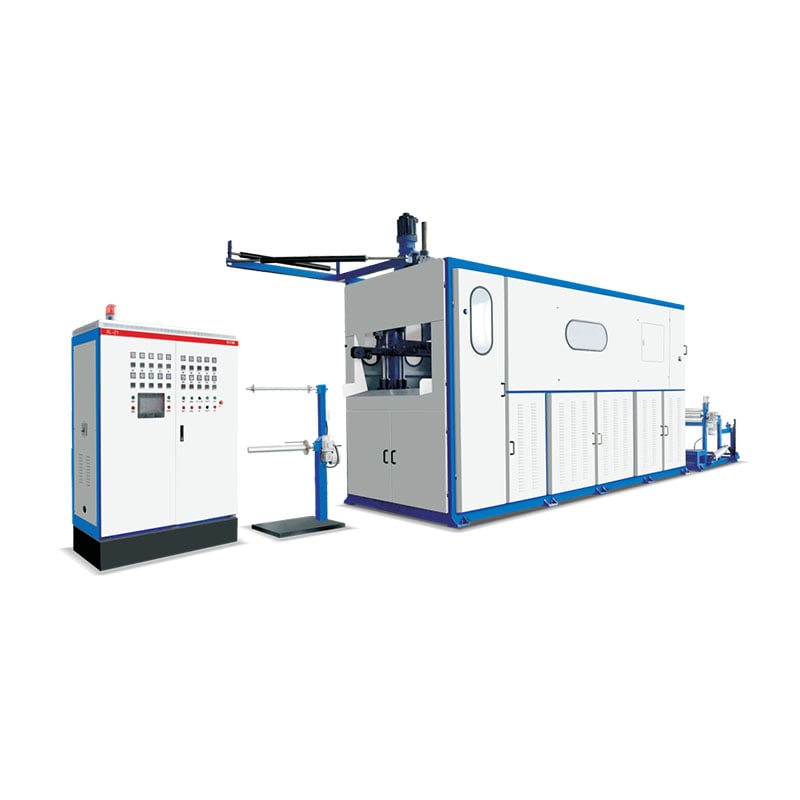
A thermoforming machine investment directly impacts your production efficiency, product quality, labor costs, and market competitiveness. The return on investment depends not just on equipment cost but on demand volume, product margins, operational efficiency, and market timing. Understanding these interconnected factors helps you calculate whether a thermoforming machine will generate positive cash flow within your target timeframe and business context.
Understanding Thermoforming Machine Costs and Initial Investment
Capital Expenditure and Equipment Pricing
A thermoforming machine price varies significantly based on capacity, automation level, and production speed. Entry-level models designed for smaller batch runs typically cost between twenty and fifty thousand dollars. Mid-range thermoforming machine options with higher automation and faster cycle times range from fifty thousand to two hundred thousand dollars. Large-scale industrial thermoforming machine systems capable of continuous production and advanced control features can exceed five hundred thousand dollars. Beyond the raw equipment cost, budget for installation, tooling setup, operator training, and integration with existing production lines. This total thermoforming machine investment, including ancillary expenses, often represents fifty to seventy percent more than the machine's listed price alone.
Hidden Costs Beyond Equipment Purchase
Many manufacturers underestimate the total cost of thermoforming machine ownership. Facility preparation, including electrical upgrades, compressed air systems, and climate control modifications, can add ten to thirty thousand dollars. Custom tooling and molds for your specific product designs represent another significant thermoforming machine cost, ranging from five thousand to fifty thousand dollars depending on complexity. Initial material purchases, raw plastic inventory, and setup supplies required before the thermoforming machine becomes productive often consume five to fifteen thousand dollars. Failure to account for these hidden expenses leads to underestimated payback periods and unrealistic ROI projections for your thermoforming machine investment.
Production Capacity and Revenue Generation
Output Volume and Market Demand Alignment
A thermoforming machine's ROI depends fundamentally on whether sufficient market demand exists for increased production volume. If your current operation generates annual sales of five hundred thousand dollars and demand remains stable, investing in a thermoforming machine to triple capacity creates risk unless you have confirmed orders for that additional output. Conversely, if you regularly turn away customers due to production constraints or operate at near-maximum capacity with strong demand signals, a thermoforming machine directly converts that latent demand into revenue. Before purchasing a thermoforming machine, validate market demand through customer inquiries, sales pipeline analysis, and industry growth forecasts. A thermoforming machine generating an extra two hundred products daily creates value only if those products sell at predictable margins.
Pricing Power and Product Margin Impact
When you introduce a thermoforming machine to your production capability, the resulting increased supply can affect product pricing. Markets with strong, stable demand often maintain consistent product margins even as supply increases, protecting your thermoforming machine ROI. However, commodity-oriented markets experience price compression when supply rises, potentially eroding the per-unit profitability that makes your thermoforming machine investment worthwhile. Analyze your specific market dynamics before committing capital. If your products command premium pricing due to quality, customization, or brand strength, a thermoforming machine preserves healthy margins while expanding revenue. If your market treats your products as commodities subject to price competition, a thermoforming machine's value depends on your cost structure and production efficiency advantages versus competitors.
Operational Efficiency and Labor Cost Reduction
Automation Impact on Workforce Requirements
A modern thermoforming machine reduces direct labor requirements per unit produced, lowering your cost structure and accelerating thermoforming machine payback. Manual thermoforming processes require skilled operators and often involve inconsistent quality and slower throughput. An automated thermoforming machine typically requires one operator per machine during production runs, handling material loading, monitoring output quality, and managing changeovers between product runs. While labor cost per unit decreases significantly, the thermoforming machine does not eliminate headcount in most operations. Instead, it redistributes labor toward quality control, maintenance, machine programming, and equipment troubleshooting. Calculate your specific labor savings by comparing current headcount needed for manual production versus operators required for thermoforming machine operation at your target output volume.
Quality Consistency and Scrap Reduction
A consistent thermoforming machine produces parts meeting tighter tolerances with less scrap waste than manual methods, directly improving ROI. Manual thermoforming involves operator variability, leading to higher defect rates, customer returns, and material waste. A thermoforming machine maintains consistent cycle times, heating profiles, and pressure parameters, producing parts with repeatable dimensions and surface quality. Scrap reduction of five to fifteen percent translates directly to higher material utilization and lower per-unit production costs. For manufacturers producing mid-to-high-volume products with modest margins, the scrap reduction benefit of a thermoforming machine often contributes more to ROI than labor savings alone. When a thermoforming machine reduces scrap from ten percent to two percent on a product generating fifty-thousand annual units, the material savings often exceed fifty thousand dollars annually at current plastic resin pricing.
Calculating True Thermoforming Machine ROI and Payback Timeline
Building Your ROI Financial Model
Start by quantifying baseline metrics: current annual production volume, cost per unit produced today, labor hours per unit, and current scrap percentage. Next, project future state metrics assuming thermoforming machine operation: annual production volume at target capacity, cost per unit with thermoforming machine, labor requirements, and projected scrap percentage. Calculate incremental annual benefit as (additional revenue from increased volume plus quality/labor improvements) minus (thermoforming machine operating costs including utilities, maintenance, tooling depreciation). A thermoforming machine generating an additional two hundred thousand dollars in annual gross margin against a one-hundred-thousand-dollar equipment cost delivers a 1.0-year payback. Most well-deployed thermoforming machine investments achieve payback between 1.5 and 3.0 years. Beyond payback, project five-year and ten-year net present value to understand total wealth creation. A thermoforming machine delivering strong payback in year two generates substantial cumulative value over its operational lifespan.
Scenario Analysis and Risk Assessment
Perform sensitivity analysis on your thermoforming machine ROI model by varying key assumptions: market demand might drop twenty percent below projections, product margins might compress five to ten percent due to competitive pressure, or thermoforming machine utilization might fall short of targets. Test how your payback timeline changes if the thermoforming machine operates at seventy percent capacity instead of full capacity, or if market demand grows only thirty percent instead of fifty percent. Conservative scenario analysis showing positive ROI even at seventy-percent utilization provides confidence in your thermoforming machine investment decision. If your thermoforming machine payback extends beyond four years in base-case scenarios, or breaks negative in conservative scenarios, reconsider the investment timing or scale. Conversely, if your thermoforming machine generates positive ROI across all reasonable scenarios, you have identified a low-risk capital deployment that strengthens operational resilience and competitive positioning.
Strategic Considerations Beyond Financial Metrics
Market Position and Competitive Advantage
Beyond direct financial returns, a thermoforming machine investment strengthens your competitive position by enabling faster lead times, higher output reliability, and improved product quality. If competitors lack thermoforming machine capability, your investment creates capacity advantages that allow market share capture. A thermoforming machine enables you to serve larger customers requiring higher volumes or tighter specifications. Even when financial payback extends to 2.5 years, the strategic positioning advantage gained through thermoforming machine capability often justifies the investment in growth-oriented businesses. Conversely, if your entire competitive set already operates thermoforming machine technology, investing in a thermoforming machine represents defensive necessity rather than offensive advantage, justifying more conservative financial thresholds for investment approval.
Technology Obsolescence and Equipment Life Expectancy
A quality thermoforming machine typically operates productively for ten to fifteen years with proper maintenance, providing extended value beyond initial payback. However, thermoforming machine technology continues advancing, with newer models offering higher speeds, better energy efficiency, and enhanced automation. If your thermoforming machine investment assumes payback over eight to ten years, you face risk that technological obsolescence or competitive disadvantage makes replacement necessary before full value extraction. Plan your thermoforming machine purchase assuming you will eventually upgrade or replace the equipment, and ensure payback occurs within five to seven years of deployment. This conservative approach protects against technological risk while allowing your thermoforming machine to generate substantial value before replacement becomes necessary.
FAQ
What is the typical payback period for a thermoforming machine investment?
Most manufacturers see thermoforming machine payback between 1.5 and 3.0 years when deployed in appropriate applications with sufficient demand. Entry-level thermoforming machine systems in high-demand environments sometimes achieve payback in under 12 months. Larger thermoforming machine investments or deployments in slower-growth markets may extend payback to 3.0 to 4.0 years. Your specific thermoforming machine payback depends on baseline production costs, incremental revenue generation, market demand growth, and operational efficiency gains.
Can a thermoforming machine reduce my production costs per unit?
Yes, a properly configured thermoforming machine typically reduces per-unit production costs by fifteen to thirty percent through lower labor requirements, reduced material scrap, and faster cycle times. A thermoforming machine also improves consistency and product quality, reducing customer returns and rework costs. However, cost reduction benefits only materialize if you operate the thermoforming machine at reasonable utilization levels with adequate demand for increased output. Operating a thermoforming machine at fifty-percent capacity eliminates many efficiency benefits.
Should I lease or purchase a thermoforming machine?
Purchasing a thermoforming machine makes financial sense when payback occurs within three to five years and you expect sustained demand. Leasing a thermoforming machine provides flexibility for manufacturers testing new products, uncertain about long-term demand, or lacking capital for equipment purchases. Lease payments typically run thirty to forty percent of ownership costs annually, so leasing remains more expensive over ten years. Consider purchasing a thermoforming machine if your financial analysis shows consistent positive cash flow, or lease if you need production flexibility without capital commitment.