 EN
EN
Top Paper Making Cup Machine Manufacturers in China and Their Market Position
Leading players in the Chinese paper cup making machine industry
Chinese manufacturers account for around 65% of all paper cup machinery produced worldwide according to LinkedIn data from 2025. Companies such as Zhejiang New Debao Machinery, Wenzhou New Smart Machinery, and Ruian Mingyuan are at the forefront of this industry, constantly pushing boundaries when it comes to innovation. What makes these firms stand out is their ability to balance competitive pricing with adherence to strict quality standards like ISO 9001 and CE certifications. This combination has allowed them to establish business relationships across more than 80 different countries around the globe. The latest Paper Machinery Market Report released in 2025 points towards Zhejiang based companies leading the pack because they control nearly every aspect of production themselves, starting right from how sheets get fed into machines all the way through to making sure cups are properly sterilized before leaving the factory floor.
ZHEJIANG GUANGCHUAN MACHINERY CO LTD: Capabilities and competitive edge
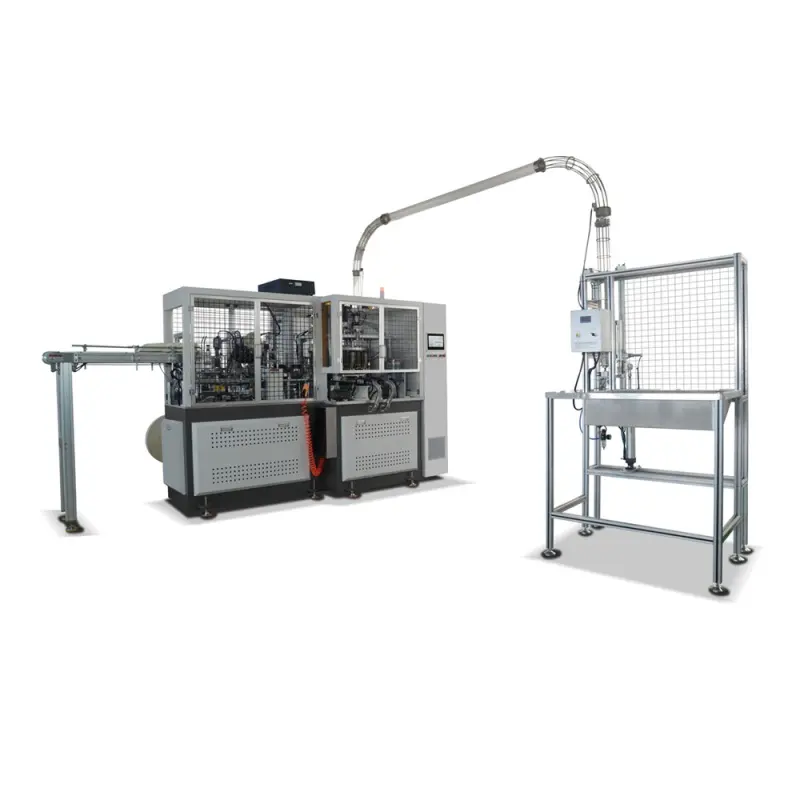
ZHEJIANG GUANGCHUAN focuses on fully automatic machines for making paper cups, capable of producing anywhere between 5,000 to almost 8,000 cups every hour. What really sets them apart is their Quick-Mold-Change patent, which cuts down on machine downtime by around 40% when compared to what most competitors offer. Plus, their machines come equipped with energy efficient servo motors that save about 18% on electricity usage according to tests run internally last year. Behind all this success lies a strong foundation: twelve research and development centers across China plus close work with some top German automation companies. These efforts have paid off handsomely, as major players in food packaging keep coming back time after time, with nearly 9 out of 10 orders being repeats for these big name clients.
Comparative overview of technology, output, and export reliability
| Manufacturer | Automation Level | Output Capacity | Export Markets | Lead Time |
|---|---|---|---|---|
| Zhejiang New Debao | Fully Automatic | 7,200 cups/hr | EU, North America | 45–60 days |
| Wenzhou New Smart | Semi-Auto | 3,800 cups/hr | Southeast Asia, Africa | 30–40 days |
| Ruian Mingyuan | High-Speed | 9,000 cups/hr | Middle East, India | 60–75 days |
Data reflects 2023 industry benchmarks for 8oz paper cup production.
Supply chain resilience and global delivery performance
Leading Chinese manufacturers maintain 3–6 months of critical component stockpiles, ensuring uninterrupted production despite semiconductor shortages. The China Packaging Federation reports 89% on-time delivery rates for paper cup machinery exports in 2023–up 7% from pre-pandemic levels. Dual-source procurement strategies for PLCs and ultrasonic sealers further mitigate risks for buyers in volatile markets.
Types and Automation Levels of Paper Cup Making Machines
Semi-Automatic vs Fully Automatic Paper Cup Making Machines
Semi automatic machines strike a nice middle ground between hands on work and automation, which makes them pretty good for businesses that aren't too small but also not massive operations churning out around 2000 cups each hour. The cost savings here can be pretty significant too, cutting down what companies need to spend upfront by roughly 30 to maybe even 40 percent when compared to going all in on full automation. Then there are the completely automatic systems that take away almost every bit of human involvement, capable of pumping out over 5000 cups per hour. These are really only worth considering for big manufacturers where sheer volume matters most and getting consistent results day after day is absolutely critical to their business model.
High-Speed and Customizable Machine Options for Diverse Production Needs
Modern paper cup making machines offer configurations optimized for:
- Speed: 3,000–8,000 cups/hour models for bulk orders
- Customization: Adjustable die-cutters for cup diameters (50–500 ml) and wall thicknesses (180–350 GSM)
- Material flexibility: Compatibility with PLA-coated or recycled paper
Production Capacity (e.g., 5,000 Cups/Hr) and Scalability Considerations
A 5,000 cups/hour machine typically requires 15–20kW power and 6–8 operators for semi-automatic setups, versus just 2–3 staff for fully automated lines. Scalability should consider:
- Upfront costs vs. labor savings over 3–5 years
- Compatibility with future throughput upgrades (e.g., modular extrusion systems)
- Footprint requirements (30–50 m² for high-speed systems)
Mid-sized factories often adopt hybrid fleets—using semi-automatic units during seasonal peaks and one or two automated lines for baseline production.
Smart Manufacturing and Technological Innovation in Paper Cup Equipment
Integration of Automation, IoT, and AI in Modern Paper Cup Making Machines
Leading Chinese manufacturers are integrating Industrial IoT sensors along with machine learning tech into their production gear these days. The goal? To fine tune parameters like forming pressure, temperature settings, and how materials flow through the system. What's the payoff? Waste reduction figures around 19% on average, plus AI powered visual inspection systems that spot flaws at least twice as fast as what humans can manage. A recent Material Handling Industry report from early 2024 shows these smart systems boost energy savings by roughly 36% specifically during cup forming operations. For companies looking to cut costs while maintaining quality standards, this kind of technological upgrade makes good business sense in today's competitive market landscape.
Industry 4.0 Readiness Among Chinese Manufacturers
Over 78% of leading Chinese suppliers offer IoT-enabled remote monitoring for predictive maintenance, aligning with global Industry 4.0 standards. This connectivity allows real-time tracking of OEE metrics—including throughput stability (±2% variance) and tool wear—across distributed facilities through cloud-based dashboards.
Data-Driven Optimization for Improved Machine Efficiency
Key performance gains include:
- 12–15% reduction in hydraulic power use via adaptive cycle control
- 8% faster die-changeovers using augmented reality-assisted workflows
- Predictive resin usage models that save $14,800 annually per line in raw material costs
Evaluating ROI: Advanced Technology Costs vs. Long-Term Benefits for Small and Medium Producers
While smart machines require a 20–35% higher initial investment, medium producers see an 18-month payback period due to labor reductions (from 3.2 to 0.8 operators per shift) and 97% uptime reliability. The 2024 Flexible Packaging ROI Study shows automated lines deliver 41% lower total cost per 10,000 units over five years compared to semi-automatic systems.
Cost Efficiency, Production Scalability, and Real-World Performance
How Automation Reduces Labor and Operational Costs in Paper Cup Production
The introduction of automated machinery cuts down on about 65 to 80 percent of what would otherwise be manual work in manufacturing settings, which naturally brings down the bottom line for operations. According to research published last year by the Packaging Efficiency Institute, companies using semi automatic equipment saw their labor bills drop around 30% compared to traditional methods. Meanwhile those investing in full automation reported even better results with roughly 40% savings thanks to features like built in feeding systems and real time quality checks. Another plus point comes from servo driven technology that consumes 22% less power than older hydraulic alternatives as noted in Sustainable Packaging Review earlier this year. These kinds of efficiency gains translate into凌晨在 savings month after month for plant managers watching every penny.
Matching Machine Scalability to Business Size and Market Demand
For smaller coffee shops making less than 5,000 cups per hour, modular machinery offers real advantages when it comes to upgrading equipment. These systems let businesses grow their capacity bit by bit without spending too much upfront cash compared to buying oversized machines right away. The big manufacturers from China have developed detailed plans for scaling operations based on what different regions need next year and beyond. Makes sense really, considering how fast Asian beverage markets are expanding at around 18% each year according to last year's industry report on manufacturing scalability. What this all means is that companies aren't sitting on idle machines most of the time, and they keep their equipment running smoothly through busy periods with downtime staying below 5% even during those hectic holiday rushes.
Case Study: Medium-Sized Packaging Company Doubles Output With Automated Paper Cup Making Machine
A Southeast Asian packaging firm increased monthly output from 8 million to 17 million cups within six months after installing a multi-lane automatic machine with IoT performance tracking. Results included:
- 34% reduction in per-unit labor costs
- 19% improvement in material yield via real-time thickness monitoring
- ROI achieved in 14 months, well below the industry average of 22 months
This outcome aligns with findings from the Flexible Production Alliance, which notes automated systems enable 2.3x faster order fulfillment than semi-automatic alternatives.
Total Cost of Ownership and Maintenance Considerations
Modern paper cup machines feature progressive maintenance protocols that extend service intervals to 600–800 operating hours, cutting annual maintenance costs by $7,200–$9,600 per unit. Predictive systems using vibration analysis and thermal imaging prevent 82% of unscheduled downtime in automated models, according to 2023 lifecycle assessments.
Sustainability Trends and China’s Role in the Global Paper Cup Machine Market
Eco-Friendly Materials and Regulatory Shifts Driving Demand for Sustainable Packaging
As governments worldwide crack down on single use plastics, there's been a surge in need for machines that can churn out biodegradable paper cups. More than 120 nations have put some sort of plastic restriction in place, and according to market research from 2024, nearly nine out of ten food service companies plan to switch to paper packaging within the next few years. The big players in manufacturing are getting creative too, swapping out conventional materials for things like plant derived coatings and adhesive solutions that don't rely on water. This shift has cut down on polyethylene usage quite significantly actually, somewhere between forty and sixty percent less than what was common before these changes started happening.
Impact of Asia-Pacific Plastic Regulations on Paper Cup Manufacturing
Asia-Pacific nations account for 58% of global paper cup production, driven by regulations like India’s Extended Producer Responsibility (EPR) framework and China’s 2025 Single-Use Plastic Ban. These policies have boosted regional machine orders by 34% year-over-year since 2022, with automated systems representing 72% of new installations.
China’s Dominance in Eco-Conscious Paper Cup Making Machine Supply (2025–2030 Outlook)
Right now, China provides about 45 percent of all paper cup making machines around the world, and industry experts think this number might climb to around 52% by the end of the decade as companies invest more money into research for greener designs. From 2020 up until recently, factories in China managed to cut down their machines' carbon footprint by roughly 28%, mainly because they started using modular parts and some pretty smart computer systems to make everything work better. These improvements have actually helped them meet those tough environmental rules set by places like Europe and North America. Looking at what's happening lately, it seems these Chinese manufacturers are able to produce machines that generate almost no waste while costing anywhere between 15 to maybe even 20% less than similar equipment made across the Atlantic.
FAQ
Q1: What are the most notable paper cup machine manufacturers in China?
A1: Notable manufacturers include Zhejiang New Debao Machinery, Wenzhou New Smart Machinery, and Ruian Mingyuan, known for their innovation and quality standards.
Q2: How do semi-automatic and fully automatic paper cup machines differ?
A2: Semi-automatic machines balance manual and automated processes, ideal for medium-sized operations. Fully automatic machines eliminate human involvement, suitable for large manufacturers.
Q3: What role is China playing in the sustainable paper cup machine market?
A3: China contributes approximately 45% of global paper cup machines, focusing on eco-friendly designs and regulatory compliance.
Table of Contents
- Top Paper Making Cup Machine Manufacturers in China and Their Market Position
- Types and Automation Levels of Paper Cup Making Machines
- Smart Manufacturing and Technological Innovation in Paper Cup Equipment
- Cost Efficiency, Production Scalability, and Real-World Performance
- Sustainability Trends and China’s Role in the Global Paper Cup Machine Market