 EN
EN

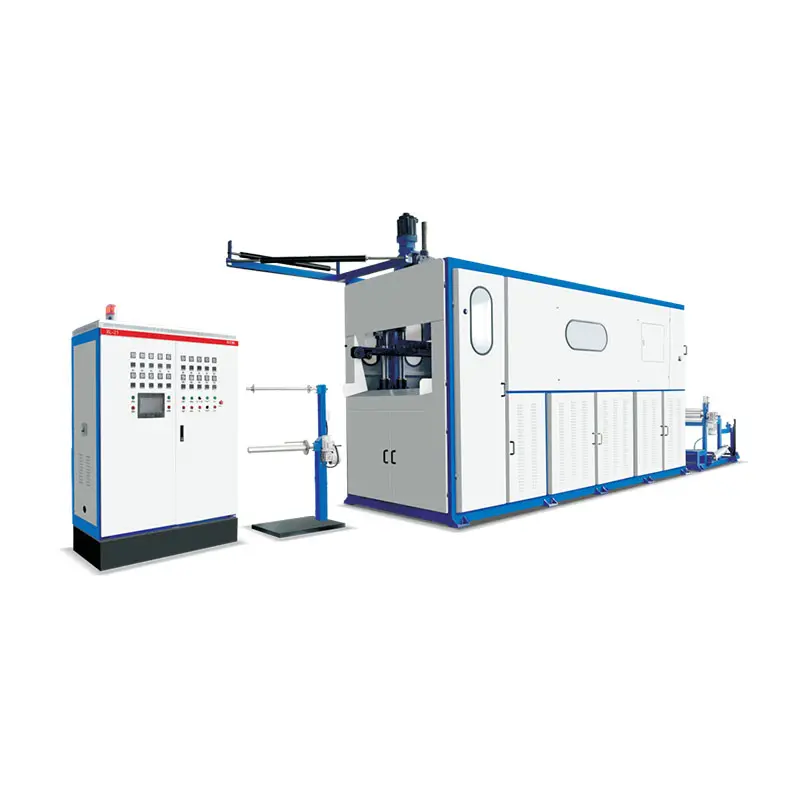
Assessing Production Capacity and Business Scalability
Matching Output to Market Demand: Understanding Paper Cup Making Machine Production Rates
When choosing a paper cup manufacturing machine, it's important to match what the machine can produce against what the business actually sells. Most mid level machines make between 40 to 80 cups every minute, so this needs to line up with realistic sales projections. The smart move according to many experienced manufacturers is to have about 15 to 20 extra capacity just in case there are unexpected rushes during peak seasons, but not so much that the company ends up buying way too much equipment. A recent look at packaging operations from last year showed something interesting: companies that adjusted their production speed based on real orders instead of guessing saw their storage expenses drop by nearly a third compared to others who kept running oversized facilities regardless of demand.
Small-Scale vs. Large-Scale Operations: Case Study on Capacity Planning
A 12-month pilot program involving 27 startups (ICFÃÂÃÂÃÂÃÂ scalability report) revealed critical insights into scaling strategies:
- Enterprises using modular machines (35â50 cups/minute) reached breakeven 5.2 months faster than those deploying industrial systems (100+ cups/minute)
- 68% of successful scaling efforts used phased machine upgrades guided by customer retention metrics
- Heat sealing stations accounted for 41% of downtime in high-volume environments
This highlights the importance of right-sizing initial investments and planning incremental growth based on real market feedback.
Balancing High-Speed Production With Consistent Quality
While modern machines can produce over 120 cups per minute, the 2024 Sustainable Packaging Quality Index shows defect rates rise sharply beyond 90 units/minute due to mechanical stress and sealing inconsistencies:
| Speed Range | Average Seam Defects | Material Waste Increase |
|---|---|---|
| 40â60/min | 0.8% | 2.1% |
| 61â90/min | 1.9% | 4.7% |
| 91+/min | 5.3% | 11.2% |
To maintain quality at higher speeds, operators increasingly adopt automated vision inspection systems. These reduce QC labor costs by 57% and help sustain defect rates at or below 1.5% even at 85 cups/minute.
Evaluating Automation Levels for Operational Efficiency
Semi-Automatic vs. Fully Automatic Paper Cup Making Machines: Key Differences
Semi automatic machines need around 2 or 3 people to operate and generally handle between 40 to 80 cups every minute. These cost about 60 percent less initially compared to their fully automatic counterparts. On the other hand, fully automatic equipment can crank out anywhere from 150 up to 300 cups per minute with minimal human input, sometimes as low as 3%. They work best for places that make more than five million cups each year according to the latest Food Packaging Automation Report. Take one supplier in the Midwest for instance who saw their labor expenses drop by nearly three quarters after switching to a completely automated production line. Amazingly enough, they still kept their ISO 9001 certification throughout this transition period.
Labor Cost Reduction and Process Reliability Through Automation
Modern automation tech like servo electric feeders and those self calibrating die cutters can cut down on manual adjustments by almost 85 percent according to industry reports. Looking at some recent data from PMMI in their 2023 research shows something interesting too. Fully automatic machines are running at around 92% uptime whereas semi automatic ones only hit about 78%. Why the difference? Well these newer systems come equipped with built in error detection sensors that catch problems before they become major issues. And when it comes down to actual bottom line results, this kind of reliability makes a huge difference. Factories that have implemented automated quality checks report seeing roughly 40% less material waste when pushing through those high speed production cycles. Makes sense really because catching defects early saves both time and money in the long run.
Smart Manufacturing Trend: IoT Integration in Modern Paper Cup Machines
Top manufacturers are starting to install IoT sensors on their machinery these days. These little devices can actually predict when bearings might fail as much as 600 hours before they do, which cuts down on those frustrating unexpected shutdowns by around 34%, according to last year's Grand Packaging Equipment Survey. What's really interesting is how these sensor systems work hand in hand with energy management tools. They help factories save money by using less power during those expensive peak electricity times. Over about 18 months, this kind of integration typically improves what's called Overall Equipment Effectiveness, or OEE for short, by roughly 19%. And let's not forget remote monitoring capabilities either. Technicians can fix about two thirds of all software problems from their desks instead of having to travel to the factory floor. That saves time and money, especially important for companies running multiple shifts or managing facilities spread across different locations.
Ensuring Material Compatibility and Product Flexibility
Support for multiple cup sizes: Diameter and height adaptability
Paper cup manufacturing equipment these days needs to be pretty versatile if it wants to keep up with what different businesses want. The best machines on the market can produce cups ranging anywhere between 55 millimeters for those little espresso shots all the way up to 110 mm for big smoothies, while also reaching heights of around 180 mm. Manufacturers have started incorporating modular molds that make switching between different cup sizes much quicker than before. Some advanced systems even maintain dimensional accuracy within plus or minus 0.15 mm across more than fifteen different preset configurations. This kind of adaptability means operators don't need multiple lines running at once just to serve coffee shops next door to juice bars and ice cream parlors sharing the same facility space.
Working with PE-coated and PLA-coated paper: Environmental and functional trade-offs
Polyethylene coatings work really well against moisture when keeping drinks cold, but polylactic acid offers something different - it breaks down in compost although manufacturers need to watch humidity levels closely during production. Machines that handle both coatings have these special temperature settings. The PLA stuff needs around 160 to 180 degrees Celsius, whereas polyethylene works better at higher temps between 190 and 220. These machines also come with better sticking features so the layers don't separate. Sure, making cups with PLA lining adds about 18 to 22 percent to production costs, but lots of restaurants are going this route anyway. According to recent surveys from EcoPackaging in 2023, roughly two thirds of food service companies want to cut waste completely, so the extra expense makes sense for their sustainability goals.
Optimal paper GSM range and sealing performance across materials
Paper weight significantly affects cup durability and insulation properties:
| GSM Range | Best For | Sealing Temp Range |
|---|---|---|
| 170-220 | Cold beverages | 150-170°C |
| 230-280 | Hot drinks | 180-200°C |
| 300-350 | Soups/Heavy items | 200-220°C |
Advanced machines include auto-GSM detection to adjust sealing pressure dynamically, reducing defective seals by up to 40% compared to manual setups.
Analyzing Energy Consumption and Total Cost of Ownership
Electrical Requirements and Power Consumption of Paper Cup Making Machines
Most paper cup manufacturing machines run somewhere between 10 to 25 kilowatts, though actual energy usage depends heavily on how automated they are. The semi automatic versions tend to save around 35 to 40 percent on electricity compared to their fully automated counterparts, although this comes at the cost of needing two or three workers during each shift. A study from last year showed that when manufacturers tweak things like motor efficiency and improve those heat sealing parts, they can cut down overall energy use by approximately 18 percent while still producing anywhere from 60 to 80 cups every minute. These kinds of improvements matter a lot for businesses looking to reduce costs without compromising production speed.
Energy Efficiency Benchmarks by Machine Class
Industry benchmarks categorize machines by energy efficiency measured in cups produced per kWh:
| Machine Type | Cups/kWh (200ml) | Annual Energy Cost* |
|---|---|---|
| Entry-level manual | 220-260 | $2,800-$3,400 |
| Mid-range automatic | 340-380 | $1,900-$2,200 |
| Premium automated | 420-460 | $1,500-$1,800 |
*Based on 8-hour days, 260 operating days/year, and $0.12/kWh electricity rate
Higher-efficiency models deliver long-term savings despite greater initial investment.
Long-Term Operating Costs: Beyond the Initial Purchase Price
Looking at total cost of ownership or TCO for facilities, we find it breaks down into roughly three main parts based on some 2021 management studies. Acquisition costs usually take up around 35 to 40 percent, followed by energy expenses at about 25 to 30 percent, while maintenance accounts for approximately 30 to 35 percent of overall spending. Equipment that has those fancy IoT sensors for predictive maintenance tends to cut downtime costs by nearly half over five years when compared with regular machines. And let's not forget about something as simple as good insulation on thermoforming modules. Just making sure these are properly insulated can actually save between twelve hundred and eighteen hundred dollars each year, though the exact amount depends on factors like cup sizes being produced and how much output there is from the line.
Maximizing ROI Through Durability, Support, and Supplier Reputation
Calculating Return on Investment: When Does Your Machine Pay for Itself?
ROI begins with comparing daily production output against operational expenses including energy, labor, and materials. A machine producing 8,000 cups/hour at 18 kW consumes approximately $6.40/hour in electricity (U.S. Energy Index 2023). When operated at 75% capacity or higher, most businesses recover their investment within 12â18 months.
Maintenance Needs and Minimizing Downtime for Continuous Production
Proactive maintenance reduces unplanned downtime by 42% and extends equipment lifespan by 3â5 years. Key practices include:
- Daily lubrication of forming molds
- Biweekly belt tension checks
- Annual motor servicing
Cloud-connected machines now predict component failures up to 14 days in advance, lowering repair costs by 30%.
Choosing Reputable Suppliers: Why Manufacturer Support Matters
Reliable suppliers offer distinct advantages:
- 7-year frame warranties, exceeding the industry-standard 3-year coverage
- 24/7 technical support with response times under 48 hours
- Complimentary operator training programs
Third-party evaluations show 68% of buyers report higher satisfaction with ISO 9001-certified manufacturers. A 2023 study confirmed that supplier-supported machines achieve 19% faster ROI due to fewer operational disruptions and quicker issue resolution.
FAQs
What is the optimal production speed for paper cup machines?
Most mid-level machines can produce between 40 to 80 cups per minute, which should align with your business's sales forecasts. It's advisable to have an extra 15-20% capacity for unexpected demand during peak seasons.
What are the differences between semi-automatic and fully-automatic machines?
Semi-automatic machines require 2-3 operators and handle 40-80 cups/minute. Fully-automatic machines can produce 150-300 cups/minute with minimal human intervention and are more suitable for large-scale production.
How does automation affect labor costs?
Automation can significantly reduce labor costs. For instance, fully automated production lines can decrease labor expenses by up to 75% while maintaining high-quality standards.
What are the advantages of IoT integration in paper cup machines?
IoT integration allows for predictive maintenance, energy savings, and remote monitoring. Technicians can resolve software issues remotely, which reduces downtime and operational costs.
How does material compatibility affect production?
Modern machines are equipped to handle various coatings and cup sizes, allowing for versatility in production. They maintain dimensional accuracy and adapt to different sealing requirements based on the material used.