 EN
EN

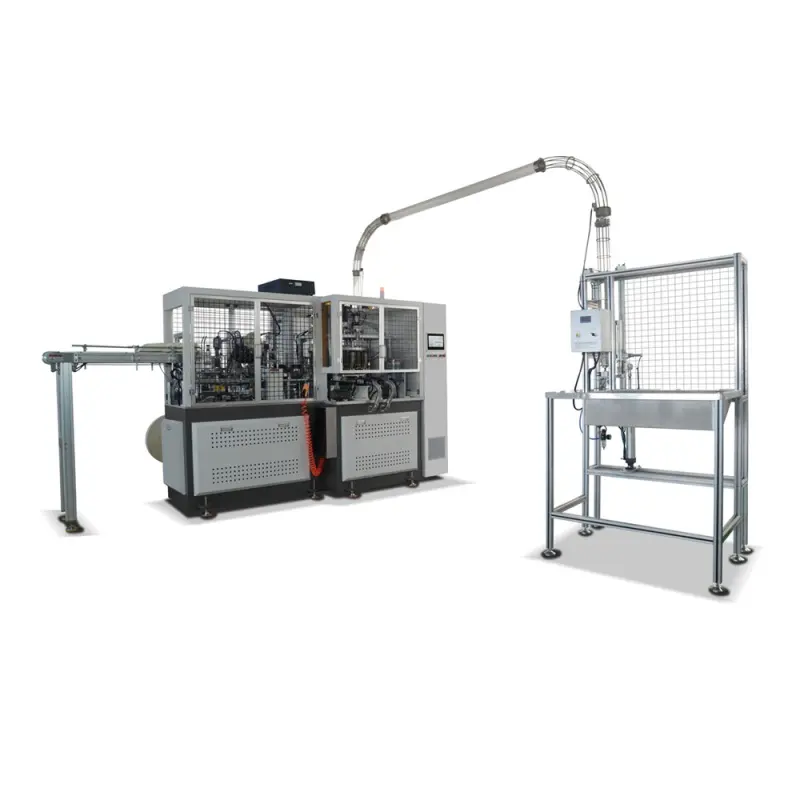
Assessing the Profitability and Market Potential of a Paper Cup Making Machine Business
Analyzing Profitability in Emerging Markets and High-Demand Regions
Global paper cup market was worth around $8.3 billion back in 2020, and experts think it will keep growing at about 4.5% each year until 2028. Why? Because governments are banning plastics left and right, plus there are these strict environmental rules now, especially with that EU Single-Use Plastics Directive making waves across Europe. The real money makers though are coming from places like Southeast Asia and Africa where businesses can make 15 to maybe even 20 percent more profit compared to other regions. Labor there isn't as expensive, and people in cities are starting to have more money to spend on convenience items. Take Vietnam for instance. Coffee shops throughout the country went through roughly 4.2 billion paper cups last year alone. That massive number shows just how much our love affair with takeout food continues to drive up demand for single use products.
Profit Margins, Revenue Potential, and Scalability Factors
How profitable a business is really comes down to how big it operates and how well everything runs day to day. Small shops with around 10 to 15 machines usually make somewhere between 18% and 22% profit after expenses. The bigger players with over 50 machines can squeeze out better results, hitting margins of about 25% to 30% when they get their processes just right. A recent look at the packaging sector from early 2024 shows something interesting too. Factories that switched to semi automatic cup makers cut their labor bills nearly in half compared to what they paid for fully manual work. Getting the size right matters a lot for growth potential. Machines need to churn out between 1,000 and 5,000 cups each hour to keep up with those sudden rushes in demand we see across different regions. And let's not forget those food delivery orders have been climbing steadily, growing almost 23% every year since 2023 started.
Case Study: ROI from a Mid-Sized Paper Cup Factory in Southeast Asia
A Thai factory investing $2.1 million in 20 automated machines achieved breakeven within 18 months. Key metrics:
| Factor | Performance |
|---|---|
| Monthly output | 22 million cups |
| Client retention | 89% |
| ROI (Year 3) | 31% |
| By targeting quick-service restaurants and adapting cup sizes for local bubble tea chains, the facility capitalized on Southeast Asia’s $9.8 billion food delivery market. |
Key Demand Drivers: Takeaway Culture, Food Delivery Growth, and Eco-Regulations
The rise of food delivery apps has really boosted paper cup sales lately. In 2023 alone, there was about a third more orders for these cups compared to previous years. Companies trying to be green ended up spending around 12 to maybe even 15 percent extra on compostable versions. Regulations have also changed things quite a bit. Last year saw something like fifty six different nations banning single use plastics, which created a sudden need worth roughly seven hundred forty million dollars right away. All these factors together mean paper cup makers are looking at pretty good growth prospects, since there's already so much demand coming from multiple directions at once.
Investment and Cost Structure for Setting Up a Paper Cup Factory
Startup Costs: Small-Scale vs. Large-Scale Production Setups
Initial investments vary significantly between scales:
- Small-scale operations ($75,000–$150,000) suit regional markets with basic machinery and 1,000–1,500 sq. ft. facilities
- Large-scale plants ($300,000+) require 5,000+ sq. ft. spaces, high-speed automated machines, and multi-shift teams
| Cost Factor | Small-Scale | Large-Scale |
|---|---|---|
| Machinery | $20,000 | $100,000+ |
| Facility Setup | $35,000 | $120,000+ |
| Labor (Annual) | $15,000 | $50,000+ |
| Source: Packaging Machinery Cost Analysis 2023 |
Breakdown of Initial Capital
Machinery accounts for 55–65% of startup budgets. Additional considerations include:
- Land requirements: Minimum 800–1,000 sq. ft. per production line
- Power supply: 380V 3-phase systems prevent downtime
- Labor: Technician salaries represent 15–20% of ongoing expenses
Machinery and Equipment Costs
Automated paper cup making machines producing 100–150 cups/minute deliver ROI within 18–24 months for medium-sized factories. High-speed models ($80,000–$120,000) reduce per-unit costs by 40% compared to semi-automatic alternatives.
Imported vs. Locally Assembled Machines
Imported machines from leading manufacturers offer 98% uptime but come with 25–30% higher upfront costs and longer lead times. Locally assembled units save 15–20% initially but require 30% more maintenance labor, according to the Global Manufacturing Cost Analysis 2022.
Selecting the Right Paper Cup Making Machine and Supplier
Semi-Automatic vs. Fully Automatic Paper Cup Making Machines: Matching Output Needs
The decision really comes down to business size and how many workers are available. For smaller operations just getting started, semi automatic machines that handle around 60 to 150 cups each minute work best when money is tight. These setups usually need about two or three people working during each shift. On the other end of the spectrum, fully automatic systems can crank out between 500 and 600 cups per minute with almost no hands on deck. Big companies looking to supply national restaurant chains or ship products overseas typically go this route. Take one factory in the Philippines as an example they managed to double their production capacity after switching to automated equipment. The savings were pretty impressive too, with labor expenses dropping nearly half according to recent manufacturing reports from ASEAN in 2023.
Key Features to Consider When Choosing a Paper Cup Making Machine
Prioritize PLC control systems for precision and customization. Energy efficiency (15–20% savings over older models) and compatibility with recycled paper are essential for sustainability-focused buyers. Look for quick-release mold mechanisms and IoT-enabled monitoring. Modular designs allow gradual automation upgrades as demand increases.
Evaluating Suppliers: Performance Benchmarks and Industry Reputation
Assess suppliers based on:
- At least five years of verified production experience
- ISO 9001 certification for quality management
- On-site testing for custom cup dimensions
Top suppliers now offer 3D virtual factory tours and AI-powered simulations to demonstrate capabilities remotely.
Ensuring After-Sales Support, Training, and Spare Parts Availability
Over half of equipment downtime stems from delayed technical support (Packaging Machinery Maintenance Study 2024). Choose suppliers offering:
- Regional service centers with under 48-hour response
- Local-language operator training programs
- Guaranteed 5-year spare parts inventory
Leading providers bundle free annual maintenance checks, reducing first-year operational risks by 31%.
Sourcing Raw Materials and Managing the Supply Chain
Essential raw materials: Food-grade paper, PE coating, and eco-friendly inks
Production requires three core inputs: FDA/ISO-compliant paper, polyethylene (PE) coating for liquid resistance, and non-toxic inks. The paper cup making machine influences material specs–thicker board (280–350 GSM) ensures durability during forming, while PE thickness (10–25 microns) balances performance and cost.
Finding reliable suppliers for consistent material quality
Partner with certified mills and chemical suppliers to minimize defects like delamination or ink bleed. Dual sourcing–one primary and one backup supplier–is widely adopted to ensure continuity. In 2024, 78% of factories used blockchain-based tracking to verify material origins.
Mitigating supply chain risks and price volatility
Paper prices fluctuated by 19% in 2023 due to pulp shortages, making fixed-price contracts vital for financial stability. Strategic logistics–such as regional warehousing of bulk PE pellets–reduces lead times by up to 30%, as shown in supply chain management studies. Factories using AI-driven forecasting report 12% fewer stockouts.
Sustainable sourcing strategies to meet regulatory and customer demands
With over 60 countries enforcing plastic bans, demand has shifted toward FSC-certified paper and plant-based PLA coatings. Leading suppliers provide full lifecycle reports, and 34% of major buyers now require carbon-neutral shipping. Local sourcing cuts transport emissions by 41%, supporting circular economy goals.
The Paper Cup Manufacturing Process: From Setup to Quality Control
Step-by-Step Overview of the Paper Cup Forming Process
Manufacturing involves six key stages:
- Material preparation: Sheets coated with polyethylene for liquid resistance
- Blank cutting: Hydraulic presses shape sidewalls and bases
- Cup forming: Machines fold and heat-seal components at 160–180 °C
- Rim curling: Rollers create reinforced edges
- Printing: Rotary or digital presses apply branding with FDA-approved inks
- Packaging: Automated systems count and shrink-wrap finished cups
Designing an Efficient and Scalable Production Line
Optimal layouts allocate 30% of floor space to raw materials, 50% to production, and 20% to quality control. Pairing semi-automatic machines ($18,000–$35,000) with modular conveyors enables outputs of 4,000–6,000 cups/hour. Energy audits show infrared drying systems cut power use by 22% versus traditional hot-air methods.
Quality Control Measures: Ensuring Leak-Proof, Durable, and Food-Safe Cups
Three-tier inspections verify:
- Seal integrity: Pressure-tested at 3–5 psi for 30 seconds
- Thermal stability: Holds 95 °C liquid for 30 minutes without deformation
- Material compliance: PE coating maintained at 12–15 microns
Standardized QC workflows reduce defect rates by 41% in high-volume settings, according to a 2024 packaging safety study.
Innovation Trends: Automation, Waste Reduction, and Energy Efficiency
Advances include AI-driven predictive maintenance, which reduces machine downtime by 35%, and water-based barrier coatings that eliminate PE plastic entirely. Solar-powered facilities in sun-rich regions achieve up to 60% energy autonomy, enhancing both sustainability and long-term cost efficiency.
FAQ
What is the current trend in the global paper cup market?
The global paper cup market is expected to grow at a rate of approximately 4.5% annually until 2028, largely influenced by the rise in environmental regulations against plastic use.
How are Southeast Asia and Africa contributing to the paper cup industry?
Southeast Asia and Africa are significant contributors to the paper cup industry due to lower labor costs and increasing urban disposable income. These regions yield profit margins 15-20% higher than other areas.
What factors affect the profitability of a paper cup business?
Profitability is influenced by the scale of operations, type of machinery used, and operational efficiency. Large operations with automated systems tend to have higher margins.
What is the difference between semi-automatic and fully automatic paper cup machines?
Semi-automatic machines require more manual labor and produce fewer cups per minute, ideal for small businesses. Fully automatic machines produce more cups with minimal labor, suitable for large enterprises.
What are key considerations in sourcing raw materials for paper cup production?
Key considerations include ensuring materials are FDA and ISO compliant, sourcing from reliable suppliers, and considering sustainable options like FSC-certified paper and plant-based coatings to meet regulatory requirements.
Table of Contents
- Assessing the Profitability and Market Potential of a Paper Cup Making Machine Business
- Investment and Cost Structure for Setting Up a Paper Cup Factory
- Selecting the Right Paper Cup Making Machine and Supplier
- Sourcing Raw Materials and Managing the Supply Chain
- The Paper Cup Manufacturing Process: From Setup to Quality Control
-
FAQ
- What is the current trend in the global paper cup market?
- How are Southeast Asia and Africa contributing to the paper cup industry?
- What factors affect the profitability of a paper cup business?
- What is the difference between semi-automatic and fully automatic paper cup machines?
- What are key considerations in sourcing raw materials for paper cup production?