 EN
EN

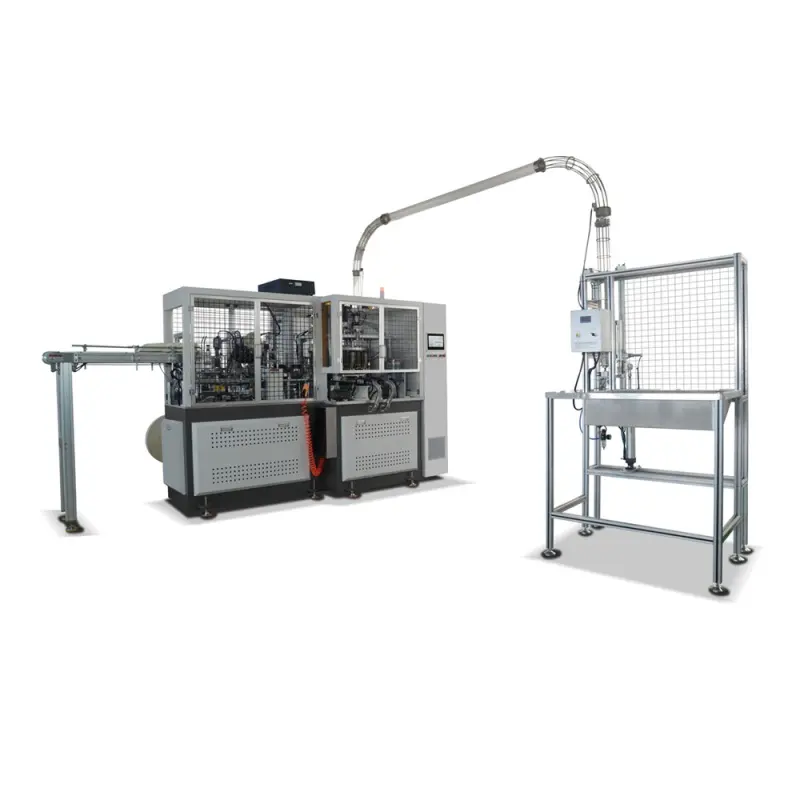
The Emergence of the Paper Cup Making Machine Industry
Historical Context of Paper Cup Adoption and Packaging Needs
The paper cup making machine business really took off because people started worrying about germs from sharing glasses back in the early 1900s. Plus, there was this growing need for drinks on the go. When disposable packaging caught on, those wax lined paper cups just became everywhere. Hospitals used them, offices stocked up on them, even movie theaters handed them out at concession stands. All this demand meant manufacturers needed better ways to make lots of cups fast. Come the 1950s, as restaurants and cafes expanded around the world, companies realized they had to crank out standardized products in massive quantities. That's when real mechanical production systems for cups finally got going.
Early Limitations of Manual Paper Cup Making Machine Systems
Old school manual paper cup machines meant workers had to do everything themselves cutting, shaping and sealing each cup individually. This led to pretty poor output rates around 10 to maybe 15 cups every minute at best, plus the quality would vary quite a bit from one batch to another. For smaller businesses running these setups, labor expenses made up well over half their total costs sometimes even close to 70%. And let's not forget about the hygiene issues either constant handling throughout the process just invited contamination risks. Most plants using this method couldn't push out more than about a million cups monthly before hitting capacity limits. As consumer demand started climbing though, these limitations became serious roadblocks for expansion plans across the industry.
Market Demand Driving Innovation in Paper Cup Machine Technology
The global paper cup market saw a pretty impressive growth rate of around 7.2% between 2020 and 2025, which definitely pushed companies toward automated solutions. Restaurants and food service providers needed all sorts of different cup sizes ranging from small 4 ounce cups to large 24 ounce containers. They also wanted various materials like biodegradable options and those extra thick double wall ones that keep drinks hot longer. This variety meant manufacturers had to invest in equipment that could quickly switch between different specifications. Looking at real world data, there were already over 5,000 semi automatic production lines operating across the globe by mid 2023. These systems cut down on manual labor needs by about 40% while boosting production volumes threefold compared to older methods. Green regulations have continued to drive technological advancements too. Most recent figures show that nearly 8 out of 10 new machines coming online in 2024 are compatible with recycled paperboard materials, showing how sustainability concerns are shaping the industry landscape.
From Manual to Semi-Automatic: The First Step in Automation
Introduction of semi-automatic and manual paper cup machines
The shift toward semi-automatic paper cup making machines allowed manufacturers to blend manual flexibility with mechanized precision. These systems retained manual feeding but automated forming and bottom sealing, reducing production errors by 25% compared to fully manual processes. This hybrid model supported small-batch customization while improving consistency in food-safe packaging.
Labor efficiency improvements and cost-benefit analysis
Semi-automatic systems reduced labor costs by 30–40% and doubled output. Though initial investment was 2.5× higher than manual setups, manufacturers achieved breakeven within 18–24 months through faster production cycles, 15–20% lower material waste, and reallocation of staff to quality control roles.
Case study: Transition challenges in mid-sized manufacturing units
Looking at 12 different packaging suppliers back in 2023, researchers noticed something interesting: nearly two thirds ran into trouble trying to get their semi automatic systems up and running properly. Take one factory down in Southeast Asia for instance. They spent almost half a year updating old equipment, dealing with all sorts of problems along the way. About 45 percent of their workers needed new training sessions, while engineers had to adjust sensor settings because of the local climate conditions. And let's not forget about adjusting production line balances so they wouldn't end up with too many automated processes for special customer requests. Companies that went slow and steady actually ended up performing better in the long run. Those who waited until everything was ready before implementing changes saw around 22% improvement in productivity compared to factories that jumped headfirst into complete automation without proper planning.
Key Technological Advancements in Paper Cup Machine Automation
Core Innovations Enabling Automation in Paper Cup Manufacturing
The latest generation of paper cup manufacturing equipment has moved away from old fashioned mechanical setups to sophisticated servo driven technology, which helps cut down on wasted materials somewhere around 40%. These days, manufacturers can create intricate cup shapes thanks to precision die cutting combined with multiple stage thermoforming processes. The alignment is spot on too, with servo motors keeping things accurate to within plus or minus 0.1 millimeters something that really matters when trying to make cups that won't leak. A recent test run in 2023 showed that programmable logic controllers, or PLCs as they're called in the industry, slashed calibration mistakes by roughly 92%, allowing production lines to crank out about 200 cups every single minute. This kind of improvement makes a big difference in both quality control and overall efficiency for plant operators.
Smart Sensors and Real-Time Monitoring for Quality Control
Modern vision systems work alongside infrared sensors to spot defects really fast these days, sometimes checking over 150 cups every single minute. They can catch problems with how thick the walls are or if there's something wrong with the seams. When it comes to gluing processes, temperature control makes all the difference. The glue stays just right when kept within about plus or minus 2 degrees Celsius, which cuts down on wasted adhesive materials by roughly a third. Factories that have adopted these improvements report dramatic drops in rejected products too. Some automated facilities saw their rejection rate drop from around 8 percent down to below 1 percent as shown in last year's Packaging Efficiency Report released back in 2023.
Integration of AI and IoT for Predictive Maintenance
Machine learning algorithms analyze vibration patterns to predict bearing failures up to 72 hours in advance, minimizing unplanned downtime. IoT-enabled machines transmit performance data to centralized dashboards, allowing remote energy optimization. Plants using these systems reported 21% higher uptime and 18% lower annual maintenance costs in the 2024 Packaging Automation Report.
High Initial Costs vs. Long-Term ROI: Evaluating Automation Investment
| Metric | Semi-Automatic | Fully Automated |
|---|---|---|
| Initial Cost | $120k | $550k |
| Annual Labor Savings | $45k | $280k |
| Payback Period | 2.7 Years | 2.0 Years |
Despite requiring a 4.6× higher upfront investment, fully automated machines deliver 84% faster ROI due to significant labor and waste reductions. Post-2020 adopters typically break even within 22 months, driven by growing demand for precision-made biodegradable cups.
Fully Automatic Paper Cup Machines: Setting the New Industry Standard
Features and capabilities of fully automatic paper cup making machine systems
Modern fully automated production lines bring together feeding mechanisms, printing units, die cutting tools, and shaping components all within one streamlined operation, capable of manufacturing around 150 drinking cups every minute. These machines rely on advanced optical sensing technology that continuously monitors product quality during manufacturing. The system catches defects at an impressive rate of nearly 99.7%, which cuts down on wasted material by approximately 18% when compared to older semi-automated equipment. What makes these systems particularly valuable is their flexibility. Operators can easily switch between different cup sizes ranging from small 6 ounce portions up to large 32 ounce containers just by adjusting program parameters. They also work well with various types of materials, handling everything from standard paperboard to environmentally friendly biodegradable options as well as those coated with protective polymer layers for durability.
Productivity metrics: Output comparison across automation levels
| Automation Level | Output Range (cups/min) | Labor Required | Error Rate |
|---|---|---|---|
| Manual | 10–20 | 3–5 operators | 12% |
| Semi-Automatic | 40–80 | 1–2 operators | 6% |
| Fully Automatic | 90–150 | 0.5 operators | 1.8% |
| Data sourced from 2024 Packaging Machinery Efficiency Report |
Fully automatic systems achieve 240% higher throughput than semi-automatic models and reduce labor costs by 70%.
Case study: Automated production line efficiency gains
A leading manufacturer achieved 98% operational uptime after implementing IoT-enabled machines, with predictive maintenance reducing annual downtime by 34%. Their 24/7 production line now fulfills 15 million cups monthly with less than 0.5% defect rates, demonstrating how automation supports Industry 4.0 goals of scalability and sustainability.
The Future of Paper Cup Machine Manufacturing: Alignment with Industry 4.0
How paper cup machine technology aligns with Industry 4.0 principles
The latest paper cup manufacturing equipment really brings Industry 4.0 concepts like system interoperability and local decision making into practice. According to recent industry reports, around two thirds of factories that have implemented IoT connected systems see about a fifth reduction in production holdups. When these machines connect smoothly with enterprise resource planning software, operators can tweak raw material purchases as conditions change, all thanks to those smart demand forecasting algorithms. From an environmental standpoint, modern cup makers are getting better at sustainability too. Many facilities now run closed loop water systems where waste gets recycled back into production, while energy consumption has dropped significantly during the actual cup forming process as manufacturers fine tune their operations for efficiency.
Data-driven optimization through IoT-enabled paper cup machines
IoT sensors reduce material waste by 18% while maintaining 99.7% dimensional accuracy. They monitor environmental variables like humidity and temperature to dynamically adjust glue application—key for consistent seam integrity. AI-powered dashboards correlate historical maintenance data with real-time vibration metrics, cutting unplanned downtime by 40%.
Global trend toward intelligent and sustainable packaging machinery
Energy-efficient servo motors reduce power consumption by 25% compared to traditional drives. The use of biodegradable PLA coatings has increased 78% since 2021, supported by IoT-enabled quality checks that verify compostability standards. Cloud-based analytics help factories balance custom and bulk production across multiple lines, minimizing carbon-intensive overtime and optimizing resource efficiency.
FAQ
What spurred the development of paper cup making machines?
The development was primarily driven by the hygiene concerns of the early 1900s, increasing demand for on-the-go beverages, and the expansion of restaurants and cafes that required mass production of standardized paper cups.
How did manual paper cup making systems limit production?
Manual systems required workers to cut, shape, and seal each cup individually, leading to low output rates, inconsistent quality, high labor costs, and hygiene issues.
What are the benefits of semi-automatic paper cup machines?
Semi-automatic machines reduce labor costs by 30–40% and increase output, offering a balance between manual flexibility and automated precision.
How do fully automated paper cup machines improve production?
Fully automated machines streamline the paper cup production process, achieving higher throughput, reducing labor costs by 70%, and maintaining high quality with an error rate of only 1.8%.
How does Industry 4.0 enhance paper cup manufacturing?
Industry 4.0 integrates IoT, AI, and smart sensors into the manufacturing process, optimizing production, reducing material waste, and improving overall efficiency and sustainability.
Table of Contents
- The Emergence of the Paper Cup Making Machine Industry
- From Manual to Semi-Automatic: The First Step in Automation
- Key Technological Advancements in Paper Cup Machine Automation
- Fully Automatic Paper Cup Machines: Setting the New Industry Standard
- The Future of Paper Cup Machine Manufacturing: Alignment with Industry 4.0
- FAQ